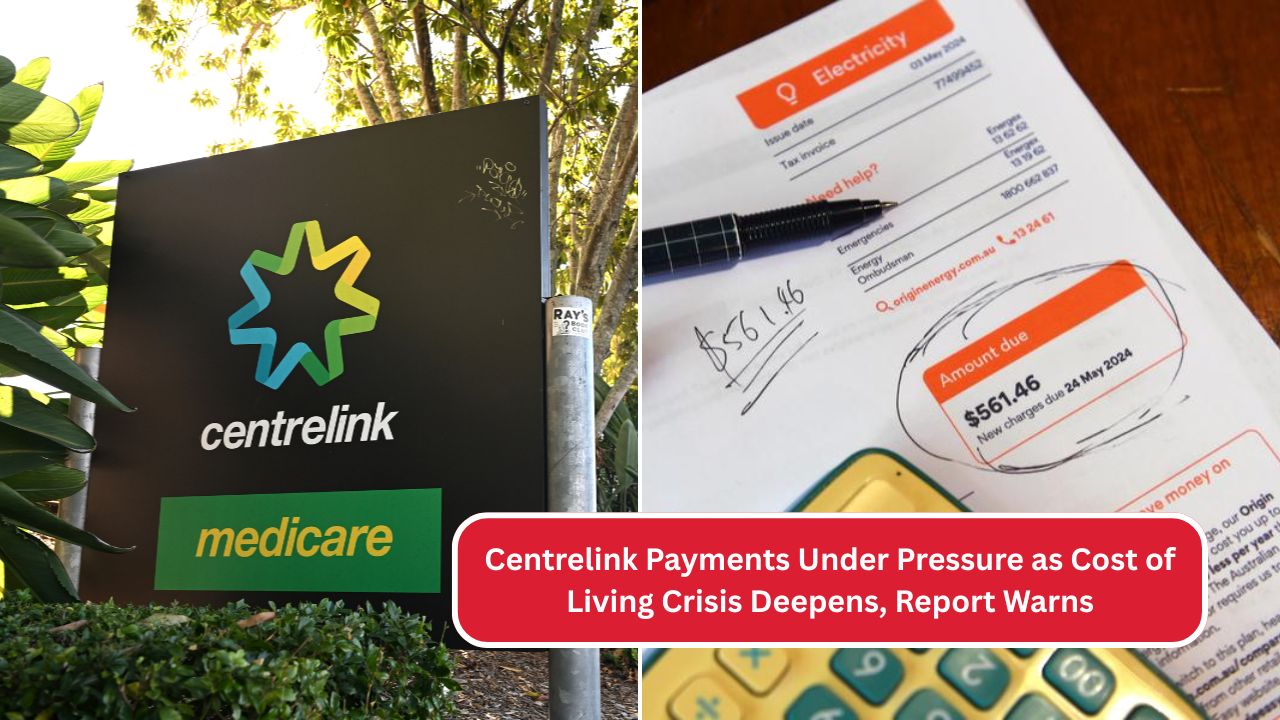
Australians relying on Centrelink payments are facing mounting financial strain as the cost of living continues to climb. From groceries to rent and utilities, everyday expenses have surged, leaving many struggling to keep up.
A new report from the Economic Inclusion Advisory Committee (EIAC) highlights the growing gap between government support and real-world living costs, warning that current payments are no longer sufficient for basic needs.
Government Advisory Body Sounds the Alarm
In its latest annual findings released ahead of the federal budget, the EIAC has once again called for an increase in Centrelink payments. The committee described the situation as worsening, with inflation and housing pressures hitting vulnerable Australians the hardest.
“The situation has since deteriorated,” the report stated, emphasizing that urgent action is required to prevent further hardship.
This marks the fourth consecutive year the advisory body has pushed for stronger financial support, indicating that previous measures have not kept pace with economic realities.
Calls to Boost Key Payments
The committee’s top recommendation is a meaningful increase to core welfare payments, including JobSeeker and Youth Allowance. It also stressed the need to raise the Remote Area Allowance (RAA), which supports people living in isolated regions where living costs are often higher.
According to the report, these payments are falling short of what is needed to maintain even a modest standard of living. The committee warned that without adjustments, recipients will continue to fall behind.
Housing Costs Driving Financial Stress
One of the biggest concerns raised is the soaring cost of housing. Rent prices across Australia have climbed significantly in recent years, making it increasingly difficult for people on fixed incomes to secure stable accommodation.
The EIAC recommended increasing Commonwealth Rent Assistance (CRA) as a way to ease the burden. Without additional support, many recipients are at risk of housing insecurity or homelessness.
Rental Market Leaves Few Options
Recent data paints a stark picture of the housing crisis. A national rental affordability snapshot found that only a tiny fraction of available properties are within reach for those on Centrelink payments.
For individuals receiving JobSeeker, affordable options are almost nonexistent. The situation is even more severe for those on Youth Allowance, where virtually no listings meet affordability criteria.
Even retirees on the Age Pension face limited choices, highlighting how widespread the issue has become.
Penalties Under Scrutiny
Beyond payment increases, the committee also urged the government to reconsider how Centrelink penalties are applied. It recommended halting payment suspensions, reductions, and cancellations linked to compliance requirements.
These penalties, often tied to job-seeking activities or reporting obligations, can leave recipients without income for extended periods. The EIAC argues that such measures can worsen financial hardship rather than encourage employment.
Recent Payment Increases Not Enough
Earlier this year, the government announced a modest increase to JobSeeker payments, raising the base rate for a single person. While the adjustment provided some relief, experts say it falls well short of what is needed.
When compared to average rental costs and essential expenses, the updated payment still leaves recipients with a significant shortfall. Many are forced to make difficult choices, such as skipping meals or delaying medical care.
Growing Gap Between Income and Expenses
Over time, the difference between welfare payments and living costs has widened. Inflation has pushed up prices across multiple sectors, but payment increases have not kept pace.
This growing gap is now affecting not only welfare recipients but also low-income workers. Even those earning minimum wage are finding it harder to afford housing and basic necessities, suggesting a broader economic challenge.
Impact on Daily Life
For people relying on Centrelink, the financial pressure is more than just numbers—it affects everyday decisions.
Many households are cutting back on essentials, relying on food banks, or seeking help from community organizations. The stress of financial insecurity can also take a toll on mental health, adding another layer of difficulty for those already struggling.
Experts Urge Immediate Action
The EIAC’s report makes it clear that addressing the issue cannot be delayed. Without stronger support, the number of Australians facing financial hardship is likely to grow.
Experts argue that increasing payments would not only improve living conditions but also stimulate the economy, as recipients tend to spend money locally on essential goods and services.
What Happens Next?
The federal budget will play a crucial role in determining whether these recommendations are adopted. With cost-of-living pressures remaining high, the government faces increasing calls to act.
Advocates are urging policymakers to prioritize welfare reform, warning that failing to do so could deepen inequality and leave vulnerable Australians further behind.
The latest report highlights a reality that many Australians are already experiencing: Centrelink payments are struggling to keep up with the cost of living.
As housing prices rise and everyday expenses continue to climb, the need for meaningful reform is becoming harder to ignore. Whether the upcoming budget delivers significant changes remains to be seen, but for many households, the stakes have never been higher.